RoboEssentials
NodeMCU ESP8266 Wi-Fi Development Board for IoT, Home Automation & Smart Projects
NodeMCU ESP8266 Wi-Fi Development Board for IoT, Home Automation & Smart Projects
Couldn't load pickup availability
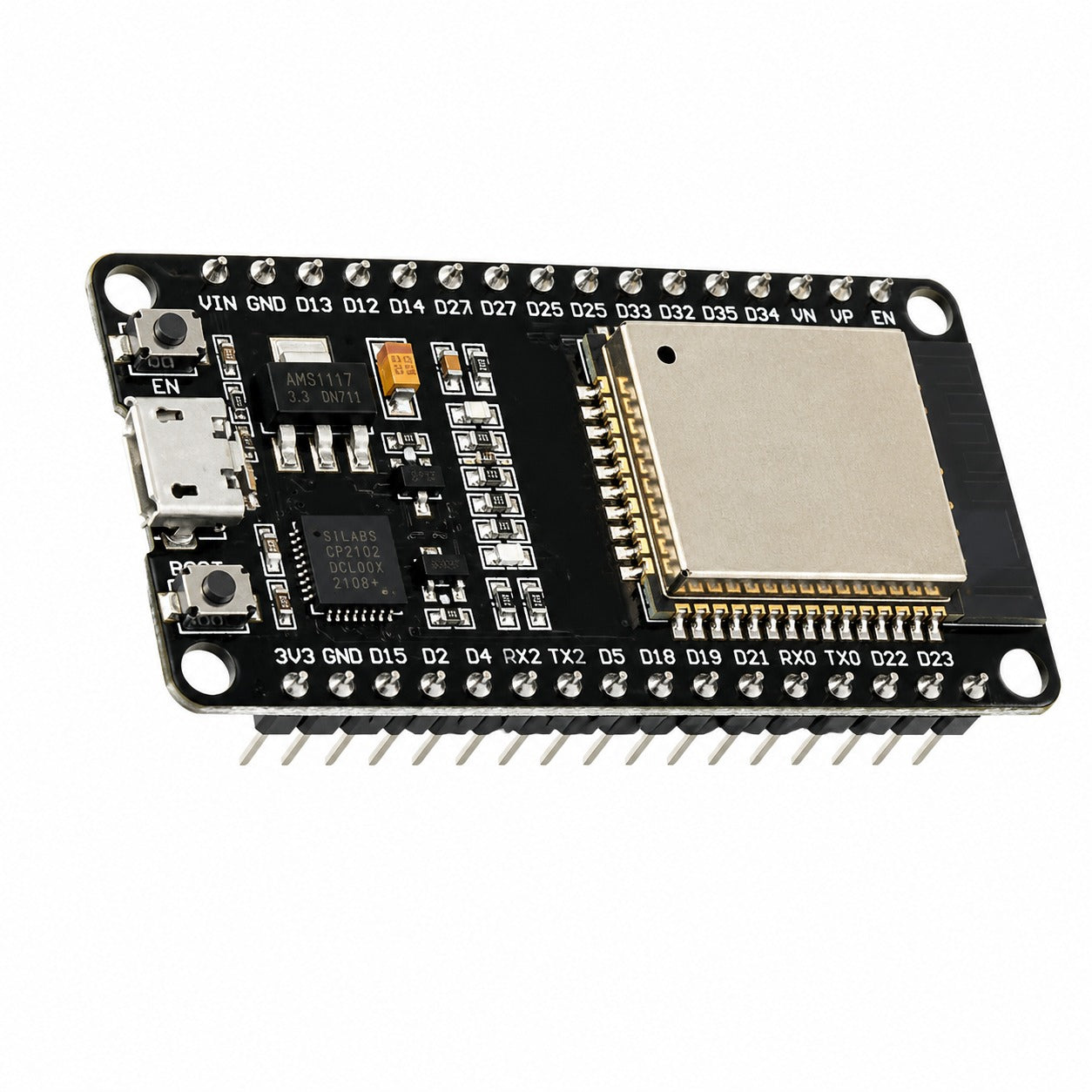
The NodeMCU ESP8266 Development Board is a compact Wi-Fi-enabled microcontroller board for IoT, home automation and wireless electronics projects. Its USB programming interface and Arduino IDE compatibility make it convenient for students and makers.
Technical Specifications
| Specification | Details |
|---|---|
| Controller | ESP8266 |
| Wireless connectivity | 2.4 GHz Wi-Fi |
| Logic voltage | 3.3V |
| Programming | USB interface |
| GPIO pins | Depends on NodeMCU version |
| Communication | UART, SPI and I2C |
| PWM | Supported |
| ADC | Available |
| Programming environment | Arduino IDE and compatible tools |
| USB connector | Depends on board version |
| Input power | Usually through USB or VIN, depending on board |
Share
Key Features
Key Features
Built-in 2.4 GHz Wi-Fi
ESP8266 microcontroller platform
USB programming interface
Arduino IDE compatible
Digital GPIO support
PWM support
UART, SPI and I2C compatibility
Compact development-board design
Suitable for cloud-connected projects
Ideal for affordable IoT prototypes
Easy sensor and relay integration
Applications
Applications
Smart home automation
Wi-Fi-controlled relay
Smart lighting
Wireless sensor monitoring
IoT weather station
Remote appliance control
Web-server projects
Cloud data logging
Smart agriculture
Water-level monitoring
Security alerts
College and school projects
Mobile-controlled electronics
Package Includes
Package Includes
1 × NodeMCU ESP8266 Development Board
Compatibility
Compatibility
Frequently Asked Questions
Frequently Asked Questions
Does NodeMCU have built-in Wi-Fi?
Yes. It uses the ESP8266 platform with integrated Wi-Fi capability.
Does it have Bluetooth?
No. Standard ESP8266 NodeMCU boards do not include Bluetooth.
Can I program it with Arduino IDE?
Yes. Install the ESP8266 board package in the Arduino IDE.
Can it connect to a mobile phone?
It can communicate through Wi-Fi using a web interface, cloud application or compatible mobile app.
Can it operate a relay module?
Yes, but confirm that the relay module accepts 3.3V logic or use a suitable driver/interface.
Is the board 5V tolerant?
The ESP8266 uses 3.3V logic. Avoid applying 5V directly to its GPIO pins.
Is it suitable for home automation?
Yes. It is widely used for smart switches, monitoring and remote-control projects.